


When a room feels small, most people instinctively blame the furniture layout or paint colour. But more often than not, the real culprit is sitting right beside your walls: the window coverings. The right window treatments can instantly transform a cramped space into something that feels taller, brighter, and more open, without moving a single wall.
At The Staging Place, we utilize a combination of visual height tricks, airy fabrics, and strategic rod placement to help Edmonton homeowners maximize every square inch. Below, you’ll learn exactly how to choose the best window treatments for small spaces, how to maximize natural light, and which common mistakes make small rooms feel even smaller.
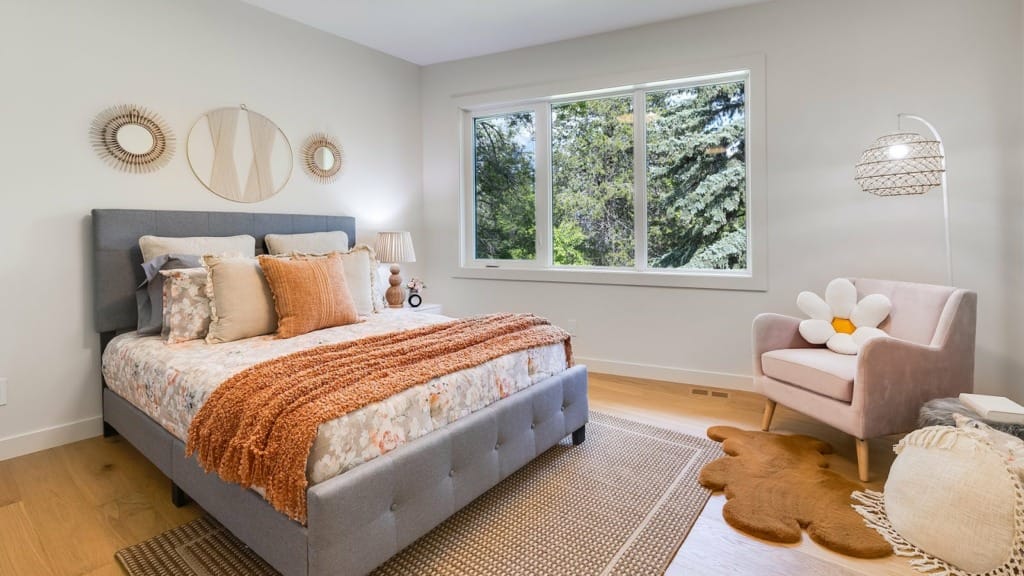
Use Floor-to-Ceiling Curtains for an Instant Height Boost
Why tall drapery works
One of the fastest ways to make a small room look bigger is by hanging curtains from the ceiling (or just under crown molding) all the way to the floor. These long, uninterrupted vertical lines visually lift the room and create the illusion of higher ceilings, especially important in standard 8-foot rooms common across Edmonton.
Think of it as giving your walls “longer legs.” The effect is subtle but powerful, especially in tighter living rooms and bedrooms.
The best fabrics for small rooms
For window treatments for small rooms, choose fabrics that don’t interrupt the eye:
- Sheer drapes
- Linen or linen-blend curtains
- Light cotton panels
These materials maintain privacy while allowing daylight to filter through. Avoid heavy velvets and dark brocades; they absorb light, weigh down the room, and counteract all your space-enhancing efforts.
Pro tip: Choose curtains in a shade close to your wall colour. This creates a clean, cohesive look that helps the fabric blend into the background.
Choose Light, Airy Fabrics That Maximise Natural Light
How sheer curtains make rooms feel larger
Natural light is every small room’s best friend. Sheer curtains brighten rooms, soften glare, and make windows feel larger and more inviting. Because they diffuse sunlight instead of blocking it, the eye perceives more depth and openness.
If your goal is to make a room look bigger, stick to a light colour palette:
- White
- Cream
- Pale grey
- Soft greige
- Sand
Light colours reflect sunlight and make your walls appear farther apart. These choices pair beautifully with minimalist, Scandinavian, and modern farmhouse aesthetics.
If you love patterns, choose ones with subtle vertical lines or pinstripes; anything with gentle vertical movement enhances height.
Hang Curtains Wider Than the Window
The 8–12 inch rule
One of the most overlooked tricks in design is extending your curtain rod 8–12 inches beyond the actual window frame. This exposes more glass when the curtains are open and makes the entire wall feel wider.
In staging, we often mount rods nearly wall-to-wall to make small windows appear more expansive.
The illusion of a larger window
By combining wider rod placement with ceiling-height drapery, you create a window treatment that visually “stretches” the wall. It’s incredibly effective in older Edmonton homes with smaller original window openings.
If drilling isn’t an option (hello, rental life), a tension rod inside the frame paired with stationary side panels can create a similar look without the hardware commitment.
Select Neutral or Light-Coloured Window Treatments
Colour heavily influences how large your space feels. When choosing window treatments to make a room look bigger, stick to:
- Soft white
- Cream
- Beige
- Taupe
- Light grey
- Greige
Matching or closely coordinating the curtain colour with the wall helps create visual continuity, exactly what a small room needs.
Avoid heavy patterns or dark colours
Dark fabrics swallow light and shrink the room visually. Bold patterns create visual clutter. Both work against the goal of making a space feel larger.
Use statement patterns elsewhere, like accent pillows, throws, or artwork, while keeping your window treatments calm and airy.
Use Minimalist Shades for a Clean, Open Look
Which shades work best?
If your room is exceptionally small or lacks wall space (think narrow offices, bathrooms, or hallways), minimalist shades can be more effective than curtains.
Ideal options include:
- Roman shades
- Roller shades
- Light-filtering blinds
- Top-down / bottom-up cellular shades
These treatments hug the window frame and disappear neatly when not in use, keeping the look clean and uncluttered.
Why they’re ideal for tiny rooms
Minimalist shades provide privacy without the bulk of gathered fabric. They’re perfect for:
- Small bedrooms
- Tight dens
- Compact dining nooks
- Tiny bathrooms
Their streamlined shape creates visual breathing room, something every small space needs.
Keep Hardware Slim and Sleek
Bulky rods and ornate finials distract the eye and make a room feel cramped. Choose slim, minimalist curtain rods in matte black, brushed nickel, or a neutral colour that blends into your walls. When in doubt, go simple, as hardware should support the look, not dominate it.
Add Vertical Elements to Elongate the Space
If your fabric is solid, you can still bring height into the room using subtle details:
- Narrow ribbed textures
- Thin vertical trim on the curtain edges
- Pinstriped materials
- Vertical shiplap or beadboard
- Tall lamps or vertical artwork
Everything that guides the eye upward contributes to the overall visual height illusion.
When No Curtains Are the Best Curtains
If your windows face a private backyard or a tree-lined area, consider going curtain-free. Bare windows flood the space with natural light and create a clean, open look. This is especially effective in modern or minimalist homes.
For rooms needing privacy, frosted film or light-filtering shades maintain the brightness while protecting your space.
Common Window Treatment Mistakes That Shrink a Room
Avoid these at all costs:
- Hanging curtains too low
- Choosing short curtains that end above the floor
- Using heavy, light-blocking drapery
- Installing bulky valances
- Picking dark or oversized patterns in small rooms
Each of these cuts visual height or depth, exactly what you want to avoid.
Conclusion
Making a small room look bigger doesn’t require renovations. Just clever styling. By choosing the right window treatments to make a room look bigger, extending curtain rods, selecting airy fabrics, and keeping colours light, you can completely transform how your space feels.
If you’re redesigning your living room, exploring new colour palettes, or trying to make your bedroom feel both cozy and spacious, we’ve created guides to help you continue your transformation:
- Living Room Furniture Layout Ideas
- Edmonton Home Colour Palette Guide
- How to Make Your Bedroom Look Cozy and Spacious
- Home Decorating Tips
- Why You Should Stage Your Home for Showings
Ready to maximize your home’s potential? Book a consultation with The Staging Place and let our team create beautifully staged, open-feeling spaces throughout your home.